Pre Employment Hearing Testing Australia: baseline audiometric testing before noise exposure begins — WHS Act obligations explained clearly for Australian employers.
Earport Audiology provides Pre Employment Hearing Testing Australia services for employers across Newcastle, Lake Macquarie and the Hunter Region. Under the Work Health and Safety Act 2011 and SafeWork NSW requirements, employers must establish a baseline audiogram before a worker commences duties in roles where noise levels regularly reach or exceed 85 dB(A) averaged over an 8-hour shift.
A baseline audiogram is not a formality. It is your organisation's documented evidence of a worker's hearing status before occupational noise exposure begins. Without it, separating pre-existing hearing loss from noise-induced loss becomes legally and medically difficult — increasing your organisation's exposure to WorkCover and compensation claims. Earport provides clear, independent audiometric reports suitable for occupational health files, HR records and WHS compliance documentation.
What Employers Ask First
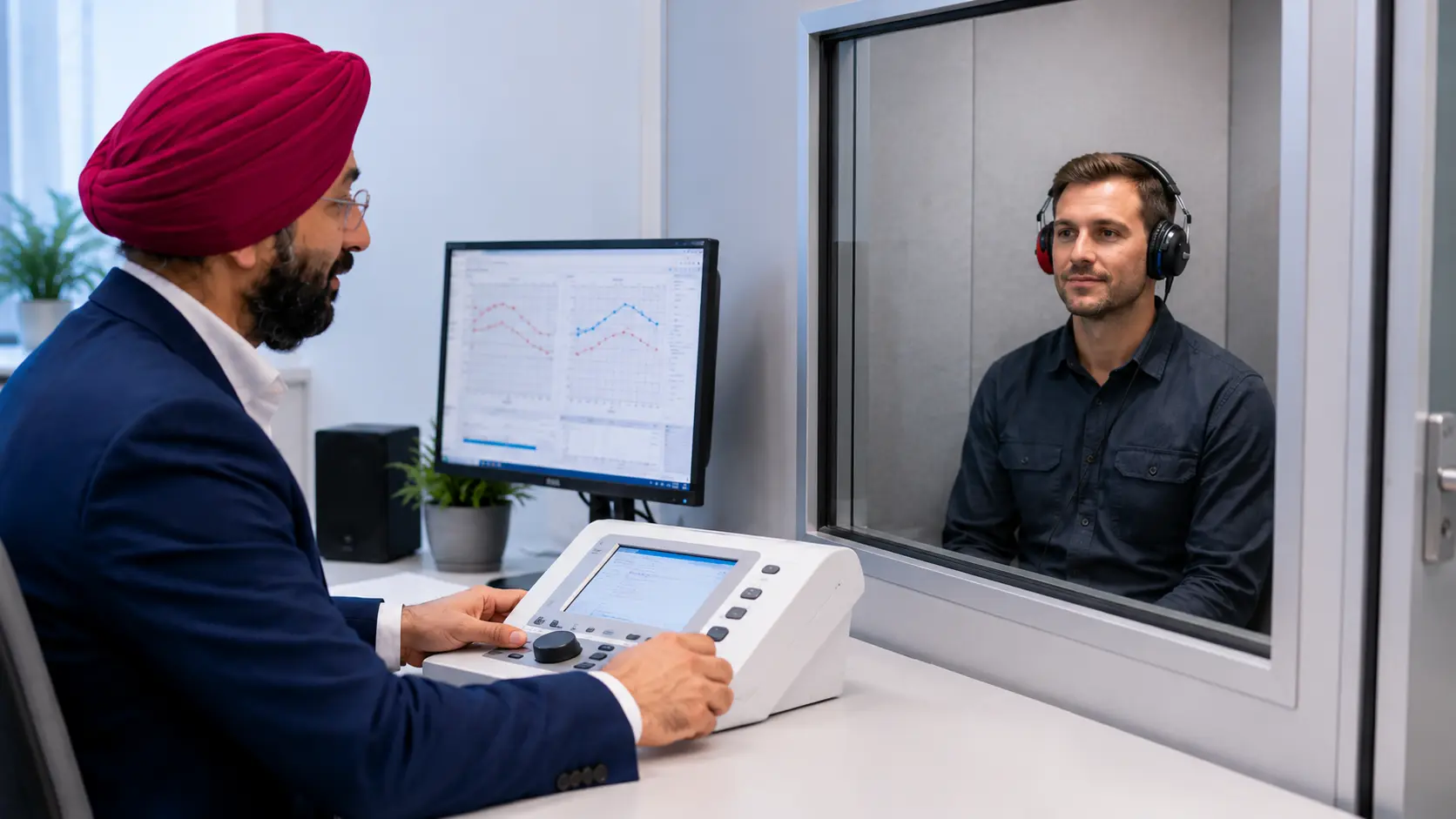
Protect your organisation under the Work Health and Safety Act 2011 — pre-employment audiometry as a legally defensible record.
Australian employers have a primary duty of care under the Work Health and Safety Act 2011 to eliminate or minimise the risk of hearing loss from occupational noise. SafeWork NSW and equivalent state regulators require audiometric testing at commencement and periodically thereafter for noise-exposed workers. Non-compliance can result in improvement notices, enforceable undertakings, or penalties.
More critically, employers who cannot produce a baseline audiogram face a legally vulnerable position if a worker later lodges a noise-induced hearing loss claim. The absence of a pre-employment record makes it nearly impossible to demonstrate that the hearing loss pre-dates employment with your organisation. Earport provides structured audiometric reports specifically designed to withstand occupational health and workers' compensation scrutiny.
Why Baseline Records Matter
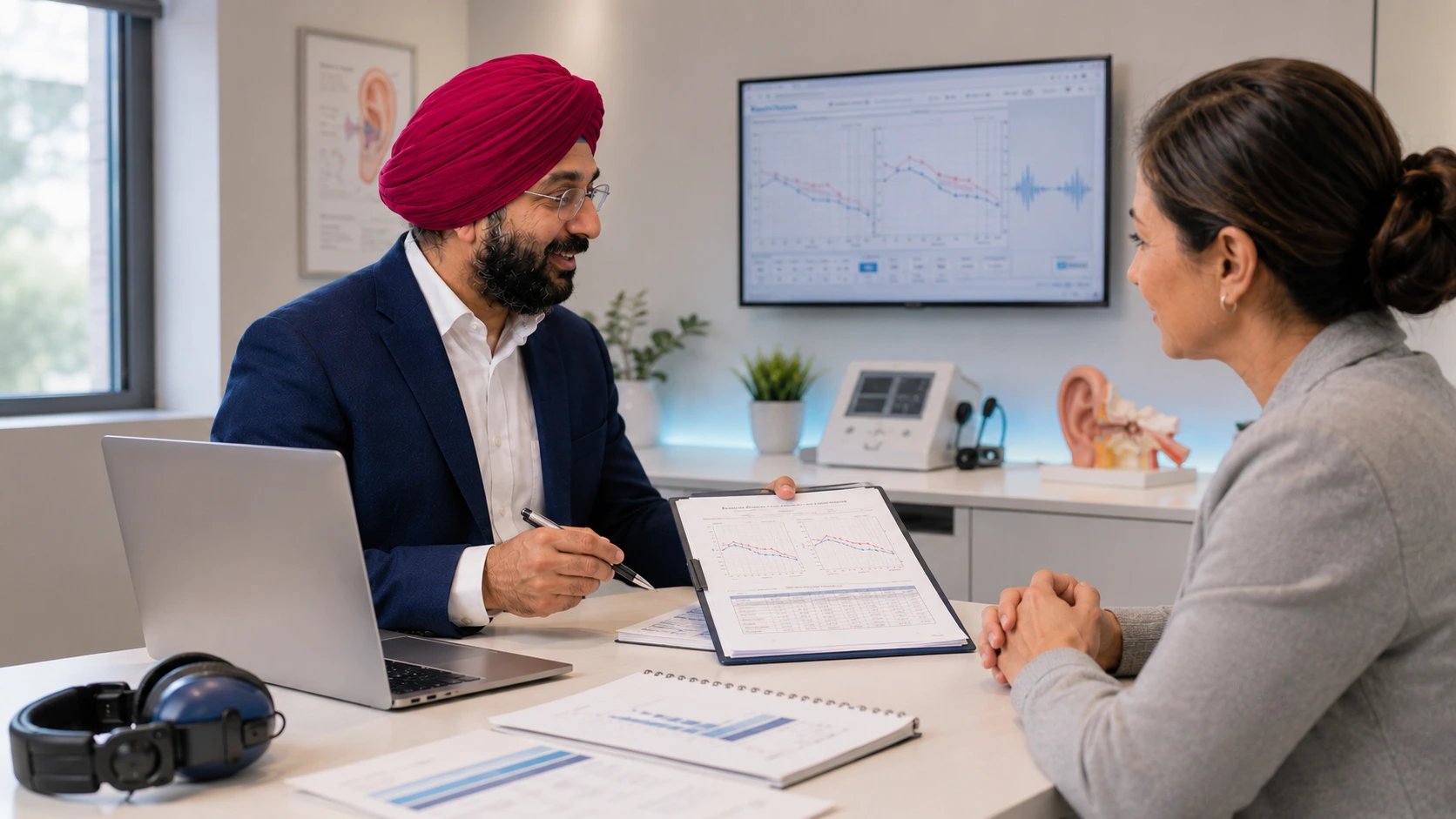
Pure-tone audiometry, threshold shift detection and occupational noise screening — what your candidates receive at Earport.
Each pre-employment hearing assessment at Earport Audiology includes a comprehensive pure-tone audiometric test conducted in a calibrated sound-treated environment. The audiogram measures hearing thresholds across the frequency range most critical to occupational noise damage and speech communication — providing a reference record that is clinically and legally meaningful.
Results are reviewed by a qualified audiologist. Any significant pre-existing hearing threshold shift is documented in the report, which is provided directly to the employer's HR or occupational health contact. Where audiometric findings suggest referral for further clinical assessment is appropriate, Earport communicates this clearly — without disrupting your hiring timeline.
Test Day Experience
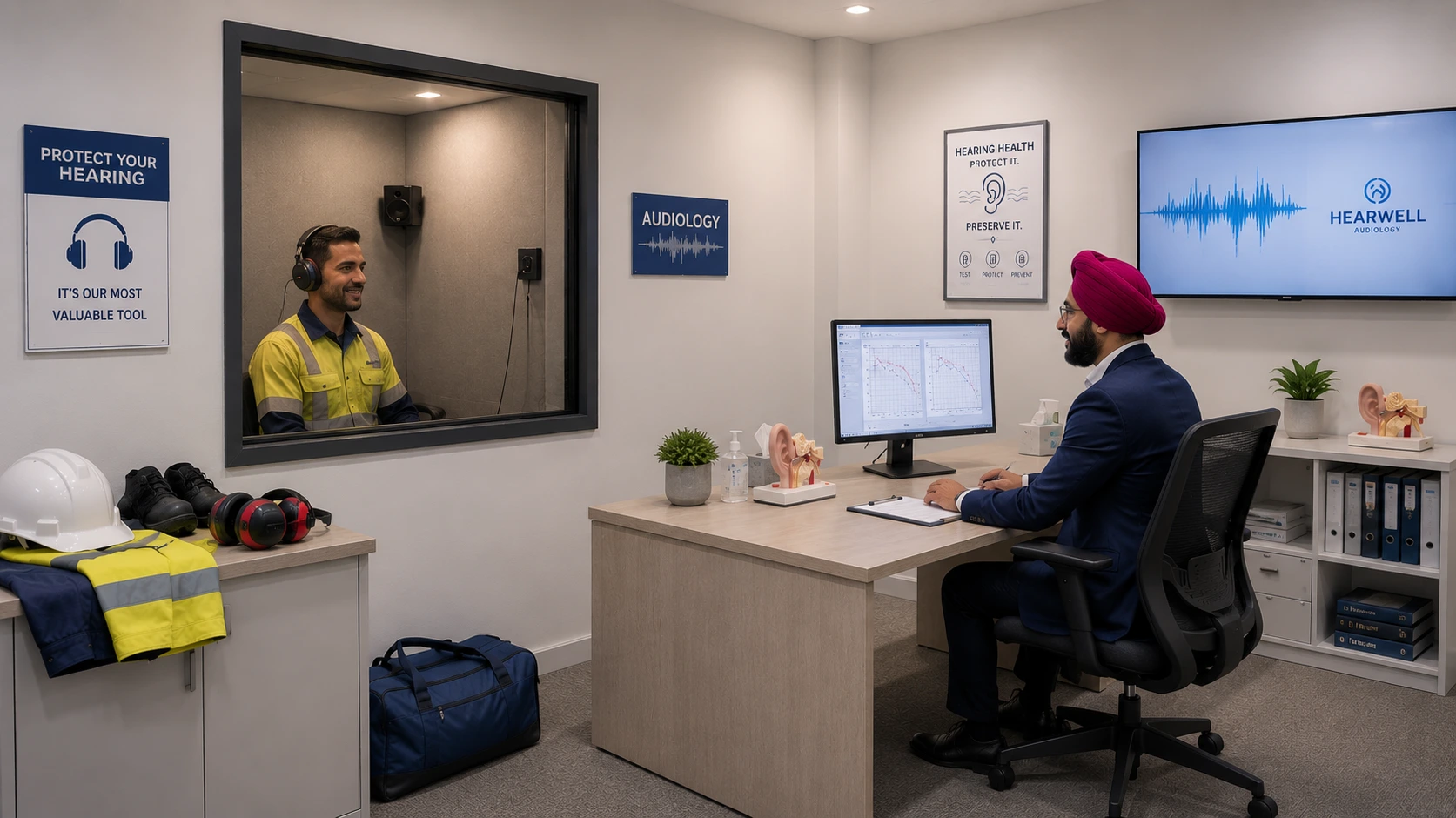
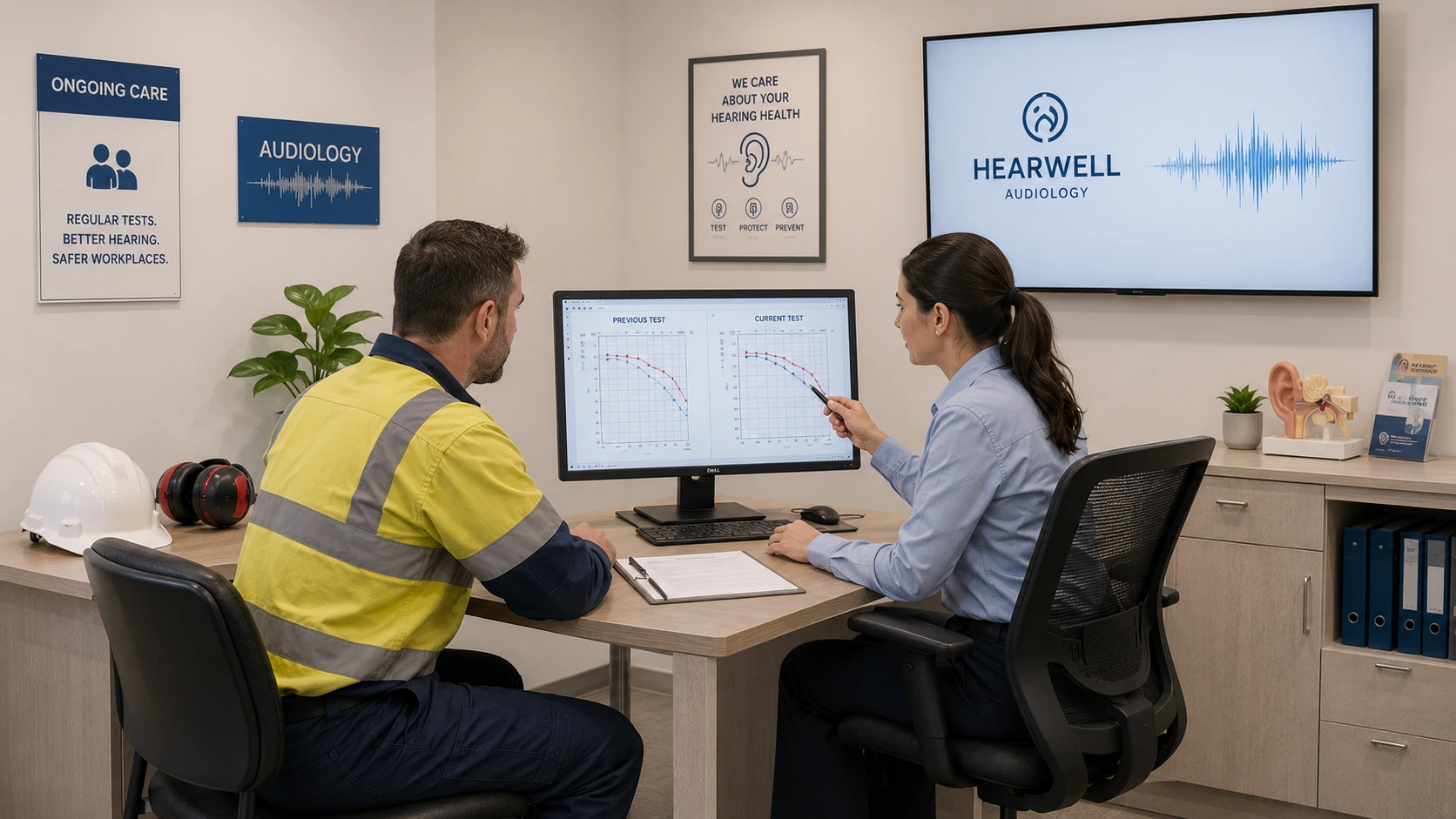
Annual hearing surveillance, threshold shift monitoring and ongoing occupational audiometry support for Hunter Region employers.
Pre-employment testing is the first step — not the last. WHS regulations require periodic audiometric re-testing for workers in noise-exposed roles. Annual or biennial surveillance audiograms detect early threshold shifts before significant hearing damage occurs. Identifying a shift early allows controls to be reviewed, hearing protection fitted or improved, and work practices assessed before irreversible loss progresses.
Earport supports employers with structured surveillance programs including appointment scheduling, threshold shift comparison against baseline records, shift notification to occupational health teams, and referral coordination where significant changes are detected. Consistent audiometric records over time are also a key component of a defensible noise management program under SafeWork NSW guidance.
Why Surveillance Matters
Pre-employment hearing testing compliance — what every Australian employer must confirm before and after hiring for noise-exposed roles.
This checklist covers WHS Act 2011 obligations, SafeWork NSW requirements and occupational audiometry best practice for Australian employers in mining, construction, manufacturing, transport and other noise-exposed industries in NSW and the Hunter Region.
WHS Act Legal Obligations
- Identify all roles where noise exposure reaches or exceeds 85 dB(A) LAeq,8h
- Conduct baseline audiometric testing before or within 3 months of commencement
- Provide periodic audiometric re-testing — at least every 2 years for noise-exposed workers
- Use a qualified audiologist or trained occupational noise assessor for testing
- Retain audiometric records for the duration of employment plus a minimum period post-employment
- Notify the worker of any significant threshold shift detected during surveillance
Pre-Existing Hearing Loss Documentation
- Baseline audiogram completed before noise exposure begins — not retrospectively
- Audiogram conducted in a calibrated, sound-treated environment meeting AS 1269.4
- Report documents all frequencies tested, thresholds recorded and any pre-existing shifts noted
- Formal audiologist report retained in the employee's occupational health file
- Baseline record accessible for comparison in future threshold shift monitoring
- Referral pathway documented if pre-existing significant loss is identified
Ongoing Surveillance Requirements
- Annual or biennial surveillance audiograms scheduled for all noise-exposed workers
- Threshold shift comparison against documented baseline on file
- Significant threshold shift triggers review of hearing protection controls
- Surveillance results reported to employer occupational health contact promptly
- Workers with progressive shifts referred for clinical audiological assessment
- Audiometric surveillance integrated into your overall noise management program
Industries Requiring Testing in NSW
- Mining and resources — open cut, underground and processing environments
- Construction — earthworks, demolition, heavy plant and machinery operation
- Manufacturing — production lines, heavy pressing, cutting and fabrication
- Heavy transport, port operations and logistics handling
- Agriculture — broad-acre machinery, grain handling and irrigation pumps
- Defence, utilities, military and emergency services roles with sustained noise exposure
See exactly how Earport Audiology compares — download the full provider comparison guide.
We have prepared a detailed, side-by-side comparison of Earport Audiology against large-chain occupational health providers and general health screening services. It covers testing standards, report quality, turnaround, compliance depth, local support and WorkCover defensibility — everything that matters when choosing a pre-employment hearing testing provider for your Australian workforce.
Trusted by HR teams and occupational health managers across the Hunter Region and NSW.
Real feedback from Australian employers and HR professionals who rely on Earport Audiology for pre-employment hearing testing, WHS compliance documentation and ongoing audiometric surveillance.
★★★★★
"The report was ready the same afternoon. Our HR team had exactly what we needed for the occupational health file and the WHS audit. Earport made the process straightforward — no delays, no chasing."
★★★★★
"We had been using a large national provider and always waited days for a report. Earport delivered a proper audiologist-reviewed report faster, with clearer clinical detail. We switched our entire workforce program."
★★★★★
"Earport takes the time to explain findings properly. When one candidate had a pre-existing shift, they documented it clearly and gave us the clinical context we needed for our records. That is exactly what a good baseline report should do."
Common questions from Australian HR managers about pre-employment hearing testing — answered clearly.
These answers are written for HR managers, WHS officers, talent acquisition leads and SMB owners in Newcastle, Lake Macquarie, the Hunter Region and across NSW who need straightforward information about occupational audiometry, WHS compliance obligations and what Earport Audiology provides.
Is Pre Employment Hearing Testing Australia-wide legally required?
Under the Work Health and Safety Act 2011 and WHS Regulations, employers must provide audiometric testing for workers who are or are likely to be exposed to noise at or above 85 dB(A) LAeq,8h. Testing must occur before or within 3 months of commencing noise-exposed work, and periodically thereafter. SafeWork NSW enforces these requirements in New South Wales. Non-compliance can result in regulatory action, improvement notices or penalty infringement notices.
What is the difference between a baseline audiogram and a surveillance audiogram?
A baseline audiogram is completed before or at the very commencement of employment in a noise-exposed role. It establishes the worker's hearing thresholds at that specific point in time — before any occupational noise has accumulated. A surveillance audiogram is completed periodically thereafter — typically annually — and is compared directly against the baseline to detect any threshold shift that may indicate developing occupational noise-induced hearing loss.
What happens if we do not have a baseline audiogram on file for a worker?
Without a baseline audiogram, your organisation cannot demonstrate the worker's hearing status before noise exposure in your workplace began. If a worker later lodges a workers' compensation or noise-induced hearing loss claim, the absence of a baseline record significantly weakens your legal position. You may be unable to show that the loss predates their employment — making it far harder to defend or limit your organisation's contribution to a claim outcome.
How long does a pre-employment hearing test take at Earport?
Most pre-employment audiometric assessments at Earport Audiology are completed in 30 to 45 minutes, including the audiologist consultation, pure-tone testing and a brief explanation of results. The formal written audiogram report is provided to your HR or occupational health contact the same day or by the next business day, so your hiring timeline is not disrupted.
Can pre-employment hearing test results be used to exclude a candidate from employment?
This requires careful consideration under Australian law. Pre-existing hearing loss, in and of itself, does not automatically disqualify a candidate for employment. Decisions must be based on whether the hearing status creates a genuine and material occupational health and safety risk for that specific role. Discriminatory exclusions based solely on disability status may expose employers to liability under the Disability Discrimination Act 1992. Earport provides clinical documentation — the employer's occupational health or legal advisor should guide the employment decision.
Which industries in the Hunter Region most commonly require pre-employment audiometry?
Industries where noise exposure commonly triggers WHS audiometric testing obligations in the Hunter Region include mining and coal processing, heavy construction and earthworks, manufacturing and metal fabrication, heavy transport and port operations, agriculture with sustained machinery exposure, and defence and utilities roles. Earport works with employers across all these sectors in Newcastle, Lake Macquarie and the broader Hunter Region.
Do you conduct on-site group hearing testing for larger employer groups?
Contact Earport directly to discuss your group testing requirements. We can accommodate scheduled group appointments at our Charlestown clinic and can discuss options for larger cohorts or ongoing surveillance programs. Direct employer contact — not a call centre — ensures your occupational health scheduling is organised efficiently and reports reach the right person promptly.
What standard does the audiometric testing at Earport meet?
Pre-employment audiometric testing at Earport Audiology is conducted in a calibrated, sound-treated environment in accordance with the requirements of Australian Standard AS 1269.4 — Occupational Noise Management: Auditory Assessment. Testing is conducted and reviewed by a qualified audiologist. Reports document pure-tone thresholds at all clinically relevant frequencies, note any pre-existing significant shifts, and provide the clinical commentary needed for occupational health records and WHS compliance purposes.
How do we set up an ongoing audiometric surveillance program with Earport?
Contact Earport Audiology to discuss your workforce size, noise-exposed role types, and any existing audiometric history. We will structure an appropriate surveillance schedule, confirm testing intervals in line with your WHS obligations, and set up a reporting arrangement that delivers threshold shift comparisons directly to your occupational health or HR contact. Programs can begin with new pre-employment baselines or incorporate existing baseline records held by your organisation.
Is a candidate's hearing test result confidential?
Individual audiometric results are health information and are subject to the Privacy Act 1988 and Australian Privacy Principles. Earport provides a report to the employer confirming the audiometric assessment outcome and any clinically relevant findings, while handling personal health information in accordance with applicable privacy obligations. Employers should maintain audiometric records securely within their occupational health file management systems, with access restricted to appropriate personnel.
What should a candidate do before attending a pre-employment hearing test?
Candidates should avoid significant noise exposure for at least 12–14 hours before their audiometric assessment where possible — this reduces the risk of temporary threshold shift affecting baseline results. They should advise Earport of any ear infections, blocked ears or recent ear procedures before attending. No special preparation beyond this is required — the assessment itself is comfortable, non-invasive and takes under an hour.
Can Earport provide audiometric testing reports that are accepted by SafeWork NSW?
Yes. Earport Audiology provides formal audiogram reports produced by a qualified audiologist, conducted in a calibrated audiometric environment in accordance with AS 1269.4. These reports are structured to meet the documentation requirements applicable to occupational hearing conservation programs under SafeWork NSW guidance and the WHS Regulations. Reports include all thresholds, clinical commentary and audiologist identification required for regulatory and WorkCover purposes.
What if a candidate already has significant hearing loss before starting work?
Pre-existing hearing loss is documented clearly in the baseline audiogram report. This clinical record is important — it protects both the employer and the worker. For the employer, it establishes that the loss pre-dated employment and limits future liability. For the worker, it ensures their existing hearing status is formally recognised before they enter a noisy environment. Earport's clinical report will note the degree and pattern of any pre-existing loss and can include a referral recommendation where further clinical management is appropriate.
How much does pre-employment hearing testing cost at Earport?
Pricing for pre-employment audiometric testing at Earport Audiology depends on the number of candidates, testing frequency, and whether ongoing surveillance is included. Contact Earport directly on 0402 291 129 or book online to discuss your organisation's requirements and receive a straightforward pricing outline — no hidden fees, no lock-in contracts.
Why choose a local independent audiologist over a large national occupational health provider?
Large national chains typically route employer contacts through call centres, use technician-level screening rather than qualified audiologist assessment, and deliver standardised reports with limited clinical depth. Earport Audiology provides direct audiologist contact, testing in a properly calibrated environment, same-day reporting, and reports that are written to be clinically meaningful and legally useful — not just a tick-box for compliance. Local presence in Charlestown means faster turnaround and genuine accountability to your organisation.
What is a significant threshold shift and does Earport notify the employer?
A significant threshold shift is a meaningful worsening of hearing thresholds compared to a prior audiogram — typically defined under Australian standards as a shift of 15 dB or more at one or more frequencies. When Earport identifies a significant shift during surveillance testing, this is clearly documented in the report and communicated to the employer occupational health contact. The finding triggers a review of the worker's hearing protection, noise controls and whether further clinical assessment is warranted.
Do apprentices and new hires in trade roles need pre-employment hearing testing?
If an apprentice or new hire will work in an environment where noise exposure reaches or exceeds 85 dB(A) LAeq,8h, the WHS regulations apply regardless of age, experience level or employment classification. Baseline audiometric testing before noise exposure begins is required. Apprentices entering trades such as boilermaking, panel beating, carpentry in high-noise sites, or plumbing in industrial environments are frequently in scope for audiometric obligations.
Can we use Earport for one-off pre-employment tests without committing to a full program?
Yes. Earport accepts individual pre-employment audiometric bookings for employers without requiring a long-term program commitment. You can book a single candidate assessment, receive the formal audiogram report and maintain full flexibility. Employers who later wish to establish an ongoing surveillance program can discuss that separately. There are no lock-in contracts or minimum commitment requirements for initial pre-employment testing.
Is there any specific WHS noise testing requirement for mining companies in the Hunter Region?
Mining operations in NSW are subject to both the Work Health and Safety (Mines and Petroleum Sites) Act 2013 and the WHS Regulation's audiometric requirements. These obligations are in addition to general WHS duties and typically require more robust and frequently scheduled audiometric surveillance given the noise intensity and exposure duration common in open-cut and underground mining environments. Earport can support mining employers with the audiometric component of their noise management obligations.
How do I book pre-employment hearing testing for my candidates at Earport?
Contact Earport Audiology directly by phone on 0402 291 129 or use the online booking link to schedule individual or group pre-employment audiometric assessments. When booking for employer purposes, please advise the candidate's role, industry, and whether this is a new baseline assessment or part of an ongoing surveillance program. Earport will confirm the appointment, advise the candidate of the pre-test preparation requirements, and deliver the report to your nominated HR or occupational health contact after testing.
WHS Compliance First — Always
Pre-employment hearing testing under the WHS Act is not optional in noise-exposed roles. Earport provides the baseline audiometric documentation that meets SafeWork NSW requirements from day one of employment.
Reports That Hold Up Under Scrutiny
Earport's audiogram reports are written by qualified audiologists for WorkCover, compensation and regulatory purposes — not generic tick-box forms. Pre-existing threshold shifts are documented clearly so your records are defensible.
Local Audiologist — Real Accountability
Earport Audiology is based in Charlestown and serves employers across Newcastle, Lake Macquarie and the Hunter Region. Direct audiologist contact, same-day reporting and no-lock-in flexibility set us apart from national chains.
Ready to set up Pre Employment Hearing Testing Australia services for your team? Contact Earport Audiology today.
Book individual candidate assessments or discuss an ongoing audiometric surveillance program. Earport provides WHS-compliant baseline audiograms, formal reports and direct employer communication — serving Newcastle, Lake Macquarie and the Hunter Region. No lock-in contracts. Same-day reports. Qualified audiologist every time.