
When hearing problems affect everyday life, you deserve clinical care that starts with understanding — not assumptions.
Hearing difficulty does not always feel like simply “not hearing enough”. You may hear someone speaking but miss the words, struggle in background noise, find conversations exhausting, notice changes in one ear, or simply feel that something about your hearing has changed.
At Earport Audiology, clinical care begins by understanding what is actually happening with your ears and hearing. Assessment, careful observation and professional interpretation help create a clearer pathway before decisions about treatment, hearing devices or ongoing support are made.
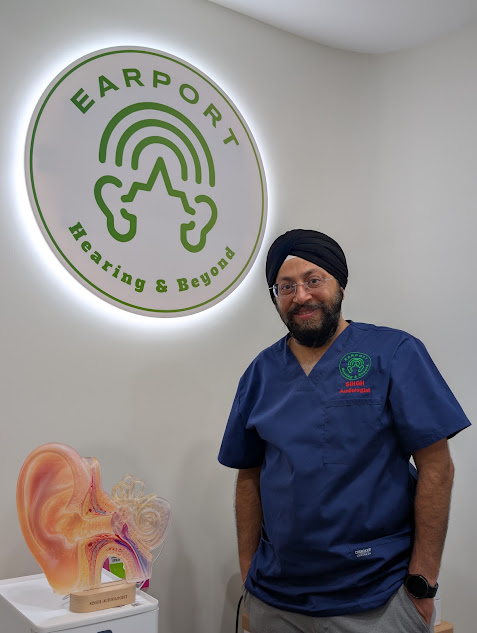
Before looking for a solution, we need to understand what is happening inside your ear.
One of the first concerns patients have is simple: “Why is my hearing changing?” Sometimes the answer may relate to the ear itself, while in other situations the hearing system requires more detailed assessment.
A careful clinical examination provides important information that cannot be obtained simply by asking whether you can hear a sound. Looking at the ear, understanding its condition and combining those findings with hearing assessment helps build a more complete clinical picture.
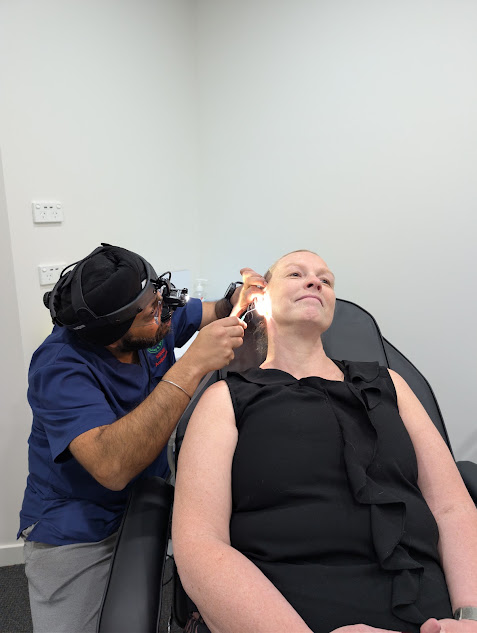
Clinical Ear Examination
A close clinical examination of the ear forms an important part of understanding a patient's hearing concerns before deciding what further assessment or care may be appropriate.
If everyday conversations are becoming harder, accurate testing can show where the difficulty lies.
Many people describe the same frustrating experience: “I can hear the person, but I cannot understand what they are saying.” Others struggle particularly when several people are talking, when there is background noise, or when they are listening from a distance.
A controlled hearing assessment helps measure hearing responses under standardised conditions. The information collected gives the clinician a stronger foundation for understanding the nature and degree of hearing difficulty.
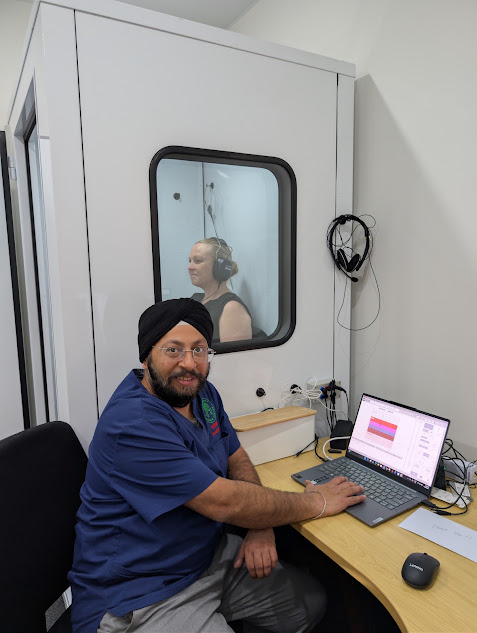
Controlled Hearing Assessment
The patient is seated inside a dedicated hearing testing environment while the clinician reviews and conducts the assessment using specialised audiology equipment.
Good clinical care goes beyond a basic hearing screen.
A hearing concern can affect people in very different ways. That is why a professional assessment may involve more than a single test. Different measurements can provide different pieces of information about how the hearing system is responding.
Specialised equipment and carefully controlled testing allow the clinician to collect meaningful information and interpret it in the context of your symptoms, history and everyday communication difficulties.
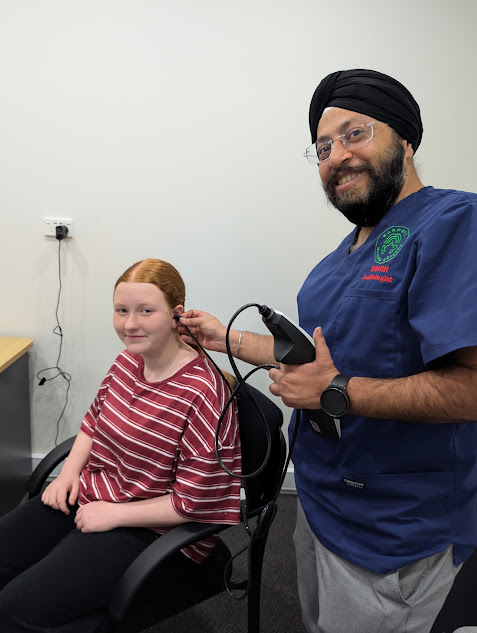
Individualised Assessment
Specialised audiology equipment is used during a clinical assessment, with the testing approach adapted to the patient's age, needs and ability to participate.
The value of testing comes from understanding what the results mean for your real life.
Getting a hearing test is only one part of the process. The next question is: “What do these results actually mean for me?”
Clinical interpretation connects your assessment findings with the difficulties you experience at home, at work, with family, on the telephone or in noisy environments. This helps turn technical test information into practical conversation about what may help.
Clinical Interpretation
Hearing assessment information is reviewed using specialised audiology software to help the clinician understand the patient's results and discuss appropriate next steps.
From concern to understanding to a practical next step.
Good hearing care should make the process easier to understand. The purpose of clinical assessment is not simply to perform tests, but to create a clearer picture of your hearing needs and what should happen next.
Listen to Your Concerns
We begin by understanding what you have noticed, what is difficult and how hearing affects your everyday communication.
Examine & Assess
Clinical examination and appropriate audiological testing provide objective information about your hearing and ear health.
Explain the Findings
Your results are interpreted in context and explained in practical, easy-to-understand language.
Plan the Next Step
Where appropriate, we discuss management, rehabilitation, monitoring, hearing technology or further clinical investigation.
You don't have to keep guessing what is happening with your hearing.
Hearing difficulties can create frustration long before someone decides to seek professional help. Clinical care gives you a place to investigate those concerns properly and understand your options.
You may be thinking…
- “Why can I hear sounds but still miss people's words?”
- “Why is conversation harder when there is background noise?”
- “Has my hearing actually changed, or am I imagining it?”
- “Do I really need hearing aids?”
- “What if something else is affecting my hearing?”
The clinical goal is to help you…
- Understand what your assessment shows.
- Know what may be contributing to your hearing difficulty.
- Understand which options may be appropriate.
- Know when monitoring or further investigation may be needed.
- Move forward with a clearer and more confident plan.
Questions people often ask before a clinical hearing appointment.
Clear information can make it easier to know what to expect before you attend an audiology assessment.
What happens during a clinical hearing appointment?
Your appointment may involve discussion of your hearing concerns and history, an examination of the ear and appropriate audiological testing. The exact assessment depends on your symptoms, age, hearing concerns and clinical needs.
Why is the ear examined before hearing testing?
Examining the ear can provide useful clinical information and helps the clinician consider the condition of the ear alongside the results of hearing assessment.
Is a hearing test the same as a clinical assessment?
A hearing test is one part of clinical assessment. A broader appointment can include discussion of symptoms, examination, appropriate testing, interpretation of results and planning the next step based on the overall clinical picture.
What if I am having difficulty understanding speech?
Difficulty understanding speech, particularly in background noise, is an important concern to discuss with an audiologist. Assessment can help identify the nature of your hearing difficulty and guide appropriate next steps.
Will I automatically be recommended hearing aids?
No. Hearing aids are one possible management option. Depending on your assessment findings and communication needs, other approaches may include monitoring, communication strategies, rehabilitation, further investigation or referral.
Can children have a clinical hearing assessment?
Yes. Hearing assessment can be performed for children using age-appropriate clinical methods. The specific approach depends on the child's age, development, ability to participate and the reason for assessment.
What happens after my hearing assessment?
Your clinician can explain the findings and discuss the appropriate next step. This may involve monitoring, further assessment, hearing rehabilitation, hearing technology or another pathway depending on your individual situation.
Why is ongoing care important?
Hearing needs can change over time, and hearing technology or rehabilitation may require adjustment. Ongoing professional support helps ensure your care continues to reflect your hearing needs and everyday communication goals.
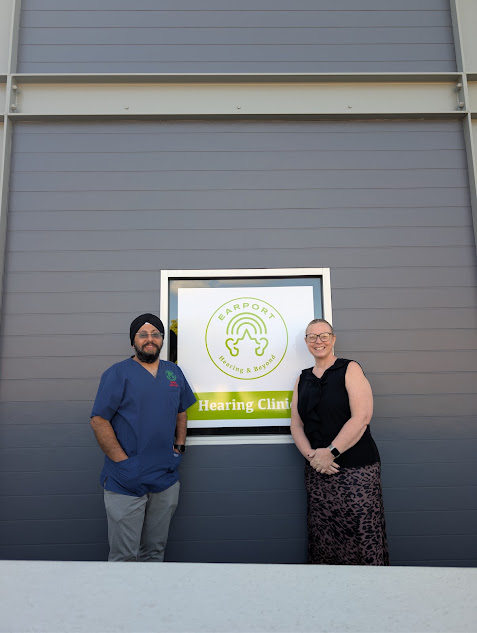
Clinical care should feel professional, personal and reassuring.
The final goal is not simply to complete a hearing test. It is to help you understand your hearing, feel comfortable asking questions and know what your next step can be.
Whether you are seeking an assessment for yourself, a family member or your child, Earport Audiology provides a clinical environment where your concerns can be discussed carefully and your hearing needs assessed individually.
Concerned about your hearing? Start with a clinical assessment.
You do not need to decide on a hearing aid before understanding your hearing. Book an appointment with Earport Audiology to discuss your concerns, complete appropriate assessment and understand what your next step may be.